Light and Flaky Croissants
Highlighted under: Fresh & Light
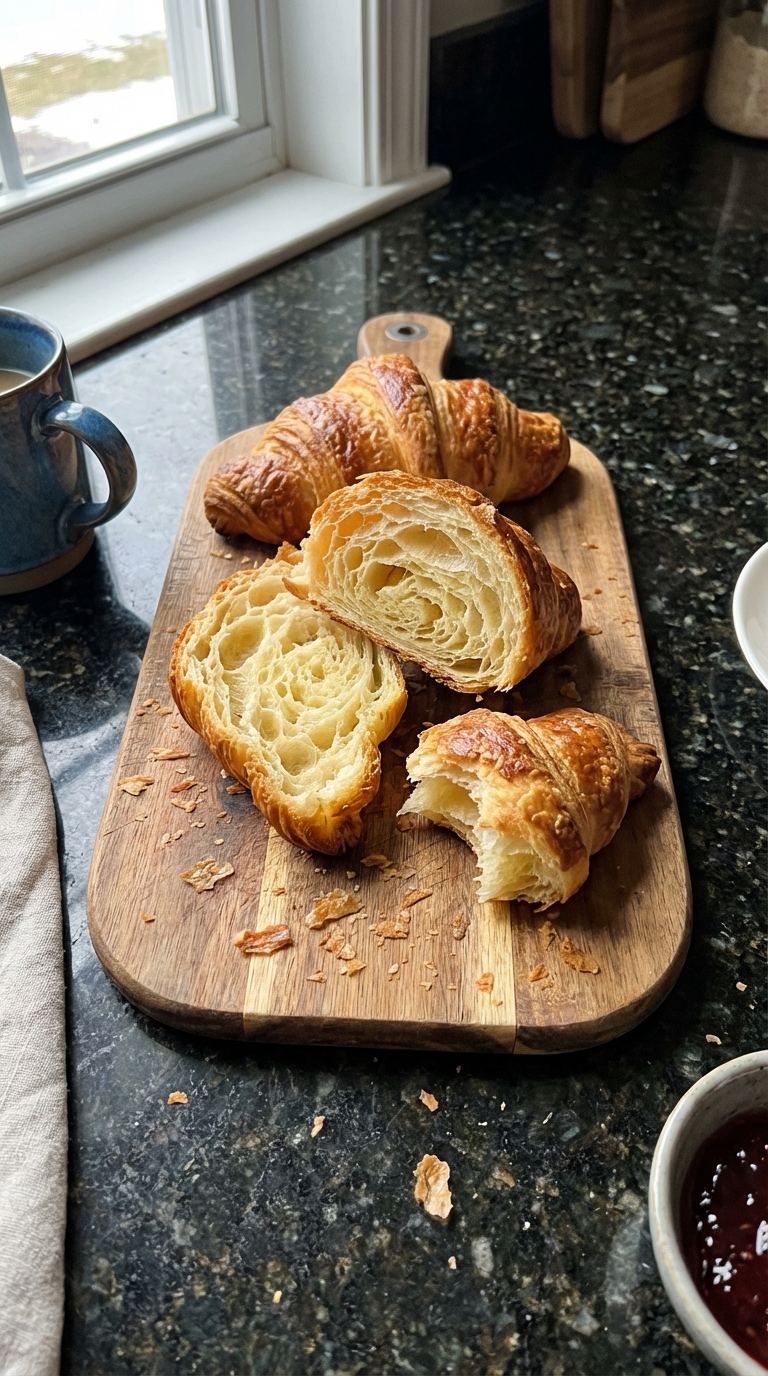
I absolutely adore making Light and Flaky Croissants right in my own kitchen. There's something miraculous about transforming simple ingredients into these golden, buttery layers that puff up just beautifully in the oven. Each bite is a crisp delight, and the aroma filling my home as they bake is simply irresistible. The key is to be patient and allow the dough to rest properly, ensuring that every croissant rises to fluffy perfection. Trust me, these croissants are worth every minute spent in preparation!
When I started my baking journey, making croissants seemed like an ambitious task, but my passion for pastry drove me to try. I remember the first time I rolled out the dough, watching those layers form, and realizing that patience was key. Each fold and turn created those delightful pockets that would later expand in the oven.
Over time, I tweaked my method, especially regarding the temperature of my butter. Using cold, high-fat butter made all the difference, leading to the perfect flaky texture that I was aiming for. Remember to let your dough rest; it’s fundamental for achieving the ideal rise!
Why You'll Love These Croissants
- Incredibly flaky texture that melts in your mouth
- Rich, buttery flavor with a hint of sweetness
- Perfect for breakfast or an afternoon treat
Mastering the Dough
The dough you create for these croissants is the foundation of their flaky texture. It's essential to knead the dough just enough to bring it together without overworking it; excessive kneading can lead to tough croissants. When it comes to resting the dough, placing it in a warm area allows the yeast to activate, creating those air pockets crucial for fluffiness. After about an hour, the dough should have roughly doubled in size – look for it to feel light and airy when you gently poke it.
Another critical aspect is maintaining the butter's cold temperature during the incorporation process. This ensures that when the dough is rolled out, the butter stays solid and creates distinct layers as it melts in the oven. If you find the dough warming up during the process, take a moment to chill it in the refrigerator. It may seem time-consuming, but these layers of alternating dough and butter are what give croissants their signature flakiness.
Shaping Perfect Croissants
When it comes to rolling out the dough for shaping, aim for an even thickness of about 1/4 inch. Uneven thickness can result in unevenly cooked croissants, with some parts overdone and others undercooked. After cutting out the triangles, stretch each piece slightly by gently pulling the corners before rolling; this helps them achieve a nice crescent shape. Make sure to roll them tightly from the wide end, as this will help them puff up beautifully in the oven.
If you're unsure about how to achieve the perfect crescent shape, visualize the shape of a real croissant and try to replicate it. The ends should be slightly tucked in, which not only improves the visual appeal but also helps prevent the croissants from unraveling during baking. After shaping, letting them rise again is critical for achieving that airy texture, so ensure they’ve increased in size before baking.
Ingredients
For the Dough
- 4 cups all-purpose flour
- 1/4 cup granulated sugar
- 1 tablespoon salt
- 1 tablespoon active dry yeast
- 1 1/2 cups whole milk, lukewarm
- 1 cup unsalted butter, cold and cut into cubes
For the Egg Wash
- 1 egg
- 1 tablespoon milk
Instructions
Prepare the Dough
In a large bowl, mix the flour, sugar, and salt. In a separate bowl, dissolve the yeast in lukewarm milk and let it sit until frothy. Combine the yeast mixture with the dry ingredients and knead until a soft dough forms. Cover and let it rise in a warm place for about 1 hour or until doubled in size.
Incorporate the Butter
Roll out the dough into a rectangle on a floured surface. Place cold butter in the center and fold the dough over it, sealing the edges. Roll it out again into a larger rectangle and fold into thirds like a letter. Repeat this process twice more, refrigerating the dough for 30 minutes between folds.
Shape the Croissants
After the last fold, roll the dough into a large rectangle, about 1/4-inch thick. Cut it into triangles, then roll each triangle tightly starting from the wide end. Place them on a baking sheet lined with parchment paper and let them rise for an additional 1 to 2 hours.
Bake
Preheat the oven to 400°F (200°C). Whisk together the egg and milk for the egg wash and brush it over the croissants. Bake for 15-20 minutes until golden brown. Allow to cool slightly before serving.
Pro Tips
- For the best results, ensure that your workspace and tools are cold, as this helps to maintain the right dough consistency. If you have time, consider making the dough the night before and letting it rise slowly in the fridge for even more flavor.
Storing and Reheating Croissants
Once your croissants have cooled, store them in an airtight container at room temperature for up to two days. If you need to keep them longer, consider freezing them. Just place the cooled croissants in a freezer-safe bag, ensuring as much air is removed as possible. When you’re ready to enjoy them, thaw overnight in the refrigerator and reheat in a 350°F (175°C) oven for about 5-10 minutes until they're warm and crisp again.
If you find your croissants have gone a bit stale, a quick refresh in the oven can work wonders. Getting them slightly warm will help restore their delightful flakiness instead of the chewy texture that can sometimes develop over time.
Common Troubleshooting Tips
If your croissants aren’t rising as expected, it might be due to inactive yeast. Always check the expiration date on your yeast before starting, and ensure it frothed up nicely when dissolved in milk. Another common issue is rolling the dough too thick or having the butter melt rather than stay solid, which can lead to lackluster puffiness. Make sure to roll out the dough uniformly and work quickly to keep the butter cold.
If your croissants are too greasy when baked, it often means the butter may have seeped out during the folding process. For next time, ensure the butter is adequately sealed within the dough during the folding steps. It's possible to also adjust your butter amount slightly; using a bit less can help prevent excessive greasiness if that's a concern.
Questions About Recipes
→ Can I freeze croissants?
Yes, you can freeze unbaked or baked croissants. Just wrap them tightly in plastic wrap and store them in an airtight container.
→ What type of flour is best for croissants?
All-purpose flour works well, but bread flour can add extra chewiness due to its higher protein content.
→ Why do my croissants not rise well?
A common reason is that the dough was not rested enough, or the ingredients were too warm. Make sure everything is cold and you allow for proper resting times.
→ How do I know when the croissants are done baking?
Croissants are done when they are a deep golden color and have a hollow sound when tapped on the bottom.
Light and Flaky Croissants
Created by: The Foodieloom Team
Recipe Type: Fresh & Light
Skill Level: Intermediate
Final Quantity: 12 croissants
What You'll Need
For the Dough
- 4 cups all-purpose flour
- 1/4 cup granulated sugar
- 1 tablespoon salt
- 1 tablespoon active dry yeast
- 1 1/2 cups whole milk, lukewarm
- 1 cup unsalted butter, cold and cut into cubes
For the Egg Wash
- 1 egg
- 1 tablespoon milk
How-To Steps
In a large bowl, mix the flour, sugar, and salt. In a separate bowl, dissolve the yeast in lukewarm milk and let it sit until frothy. Combine the yeast mixture with the dry ingredients and knead until a soft dough forms. Cover and let it rise in a warm place for about 1 hour or until doubled in size.
Roll out the dough into a rectangle on a floured surface. Place cold butter in the center and fold the dough over it, sealing the edges. Roll it out again into a larger rectangle and fold into thirds like a letter. Repeat this process twice more, refrigerating the dough for 30 minutes between folds.
After the last fold, roll the dough into a large rectangle, about 1/4-inch thick. Cut it into triangles, then roll each triangle tightly starting from the wide end. Place them on a baking sheet lined with parchment paper and let them rise for an additional 1 to 2 hours.
Preheat the oven to 400°F (200°C). Whisk together the egg and milk for the egg wash and brush it over the croissants. Bake for 15-20 minutes until golden brown. Allow to cool slightly before serving.
Extra Tips
- For the best results, ensure that your workspace and tools are cold, as this helps to maintain the right dough consistency. If you have time, consider making the dough the night before and letting it rise slowly in the fridge for even more flavor.
Nutritional Breakdown (Per Serving)
- Calories: 250 kcal
- Total Fat: 15g
- Saturated Fat: 10g
- Cholesterol: 60mg
- Sodium: 150mg
- Total Carbohydrates: 28g
- Dietary Fiber: 1g
- Sugars: 1g
- Protein: 5g